

For most of history, deciding whether to travel or shelter depended on reading the physical world — cloud shape and speed, wind direction, the behaviour of birds, the smell of the air before rain. That knowledge still works; it has simply been outsourced. In the backcountry a forecast may be twelve hours old and drawn from a station forty miles away at a different elevation.
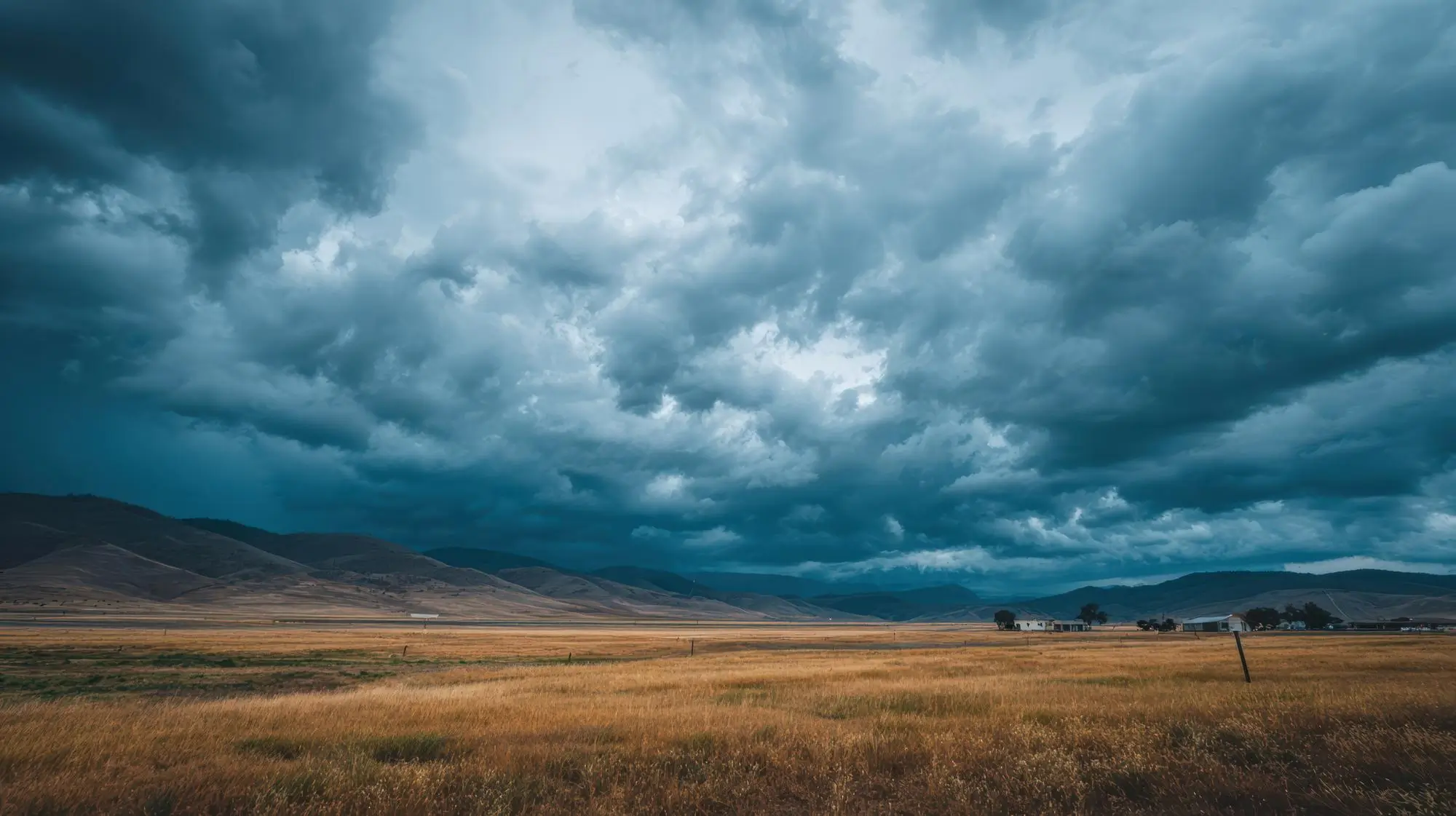
Cloud types are a sequence rather than a catalogue, because the order they appear in tells you how much time you have. High cirrus from the west marks a warm front six to twenty-four hours out. If those cirrus thicken into a milky sheet with a halo around the sun, rain is likely within a day. Cumulus building tall by late morning with a darkening base means a storm by afternoon.
Wind carries more information than any other sign because it reveals what the pressure field is doing. A wind that gradually backs usually means an approaching low and worsening conditions. Gustiness after a calm spell, with a temperature drop and a direction shift, is the signature of a cold front arriving fast. In mountains, learn the daily rhythm so you notice when it breaks.
Smell and feel are underrated instruments. Falling pressure lets gases escape from soil and vegetation, which is why the ground smells earthy in the hours before rain arrives. Rising humidity makes distant sounds carry unusually clearly and campfire smoke hang low rather than rise. Rope, canvas, and knots tighten as their fibres absorb moisture from the air.
Wildlife registers pressure changes long before humans do. Birdsong falling quiet mid-morning, swallows feeding low because insects have dropped, deer moving to shelter and lying down. None of it is folklore — all of it reflects measurable responses to falling pressure and rising humidity. Treat it as a prompt to look up and reassess rather than a forecast in itself.
A forecast tells you what the atmosphere was expected to do. The sky above you tells you what it is actually doing, and only one of those is current.
The skill is not memorising signs but building the routine of checking. Make a deliberate observation on waking, at midday, and an hour before you choose a camp. Note cloud type, cloud direction, wind direction, and temperature trend. After a season, the patterns in your own ranges start to become predictive rather than descriptive.