


Almost every miserable winter night traces back to water rather than temperature. Sweat trapped in a base layer, damp socks pulled into a sleeping bag, condensation freezing inside a single-wall shelter. Water pulls heat from the body roughly twenty-five times faster than air, which means a slightly damp insulating layer can be worse than no layer at all.
Three layers, each with one job. A thin merino or synthetic base moves sweat outward. It should be snug rather than tight, and never cotton. Above that, fleece or lofted synthetic traps warm air — two light mid layers beat one heavy one, since you can shed insulation gradually. The shell blocks wind and rain while letting vapour escape.
The ground takes more warmth from you overnight than the air does, and it is the most common oversight among people new to winter camping. A pad with an R-value of five or above is the foundation of the system, and two stacked pads beat almost any single one. Choose a bag rated fifteen degrees below your coldest expected night.
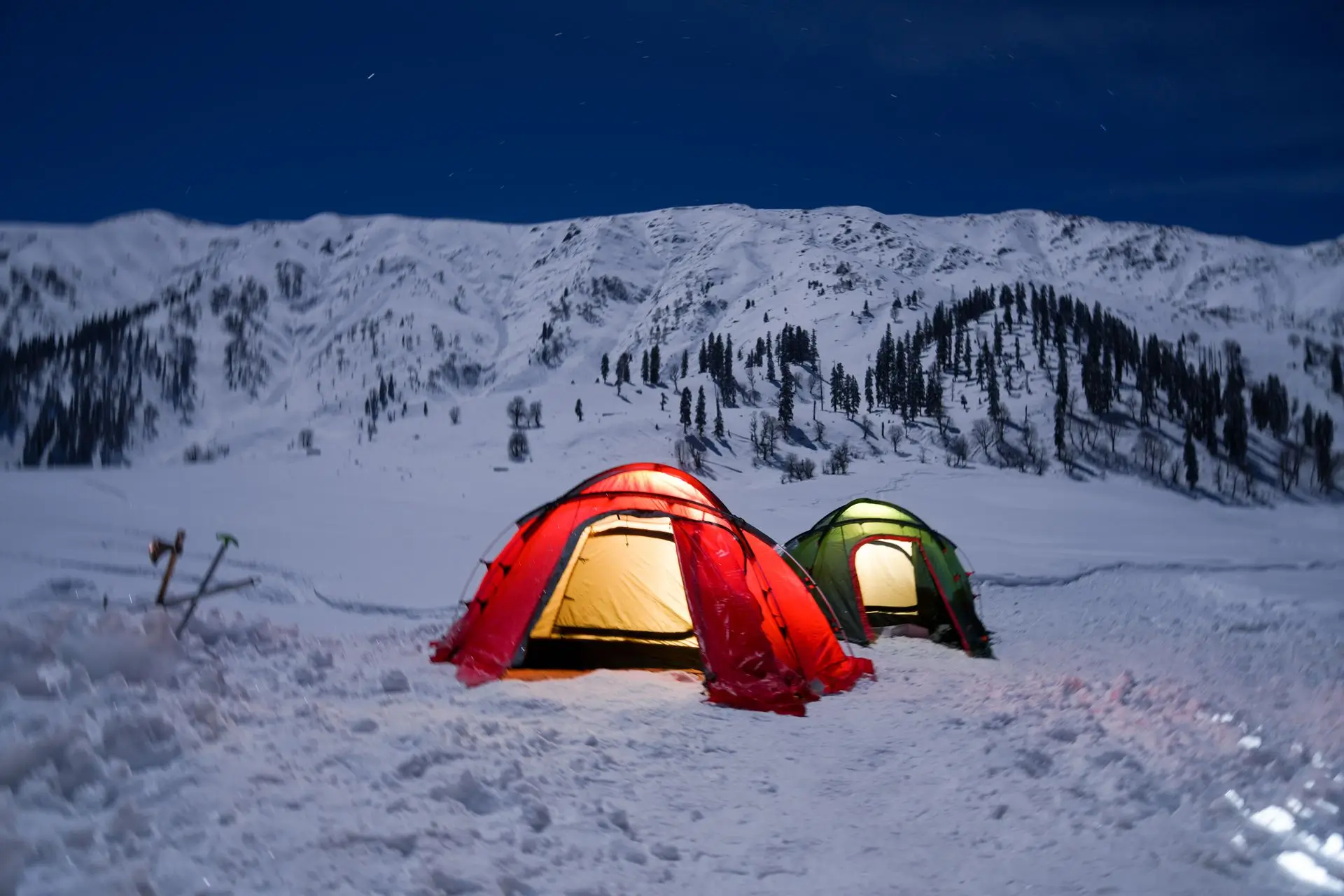
Where you pitch matters as much as what is in your pack. Cold air pools in valley bottoms, leaving a low camp five to ten degrees colder than a bench fifty metres up the slope. Look for windbreaks in tree lines, but avoid loaded conifer branches that will dump snow at the first gust. Stamp your platform and let it set for twenty minutes before pitching.
Your body is the heater and food is the fuel, which makes winter nutrition safety equipment rather than comfort. Eat a fat- and protein-heavy snack immediately before sleep. Dehydration is a bigger risk than most people expect, since thirst drops while respiratory water loss climbs. Sleep with your bottle inverted at the foot of your bag so the neck does not freeze shut.
You do not warm up a cold sleeping bag. You get into it warm, dry, and fed, and the bag simply keeps hold of what you brought with you.
The people sleeping comfortably at minus twenty rarely have the most expensive kit. They have a routine: dry sleeping socks never worn outside the bag, and a burst of movement before getting in. Keep tomorrow's base layer inside the bag so you are not pulling on frozen fabric at dawn, and stow boot liners by your knees. None of it costs anything.