
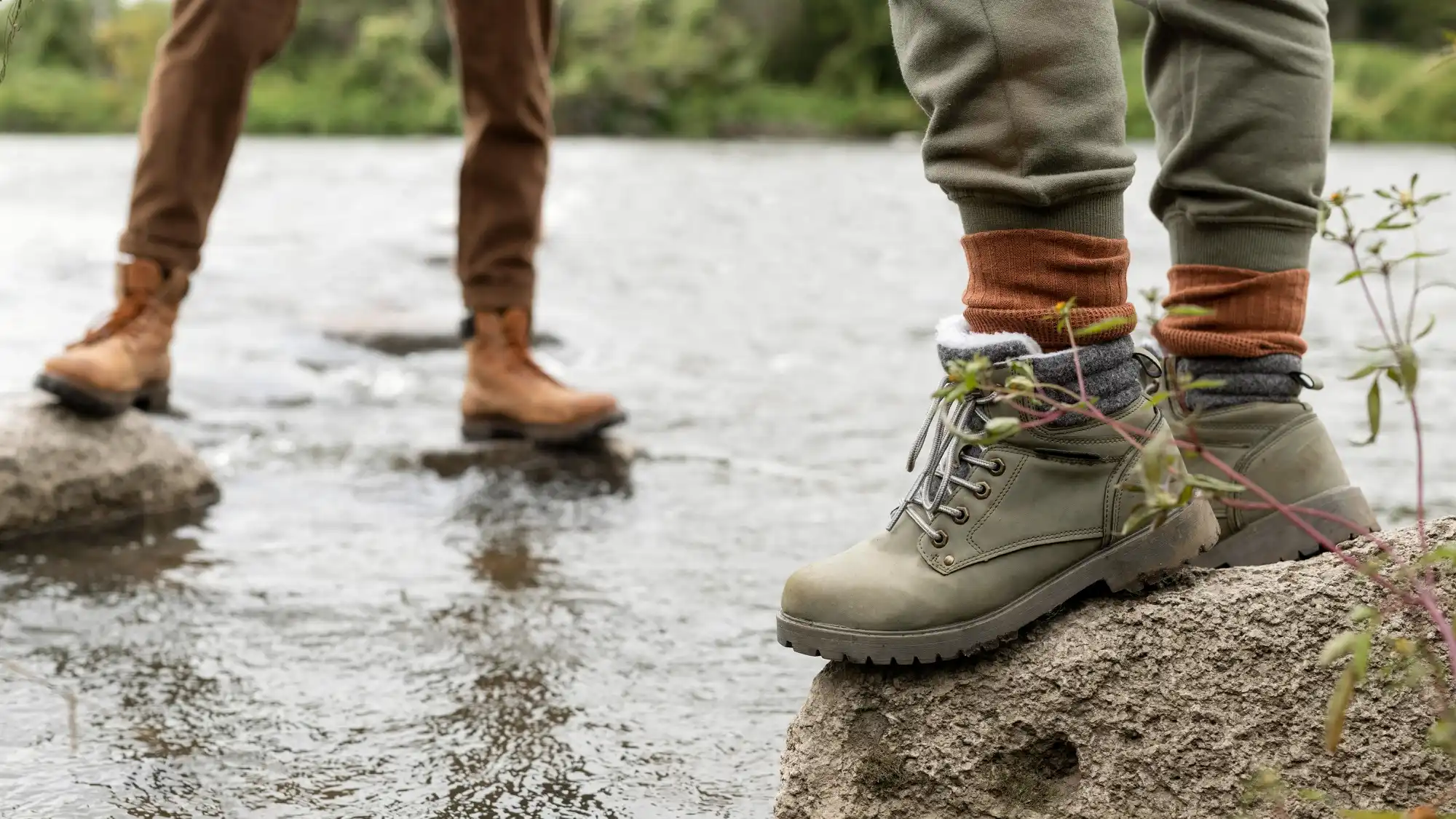


More backcountry incidents happen at river crossings than at almost any other point on a route, and the reason is rarely strength or fitness. It is that moving water hides its power behind a surface that looks readable. A stream that appears knee-deep from the bank can push hundreds of pounds against your legs mid-channel. Water that felt manageable at seven in the morning is a different proposition once the day's snowmelt arrives.
Spend ten minutes on the bank before deciding anything. Standing waves mean submerged rock, a smooth glassy tongue means depth and speed, and a boil means the current is being deflected upward by something you cannot see. Watch a floating leaf travel through the section and time it. If it clears twenty feet in under three seconds, the current is moving faster than most people can brace against.
The instinct to cross at the narrowest point is almost always wrong. Narrow means deep and fast, because the same volume of water has to squeeze through a smaller gap. You want the widest, shallowest, most braided section available. Walk upstream and downstream for fifteen minutes first, and never cross directly above a rapid, a strainer, a logjam, or a waterfall.
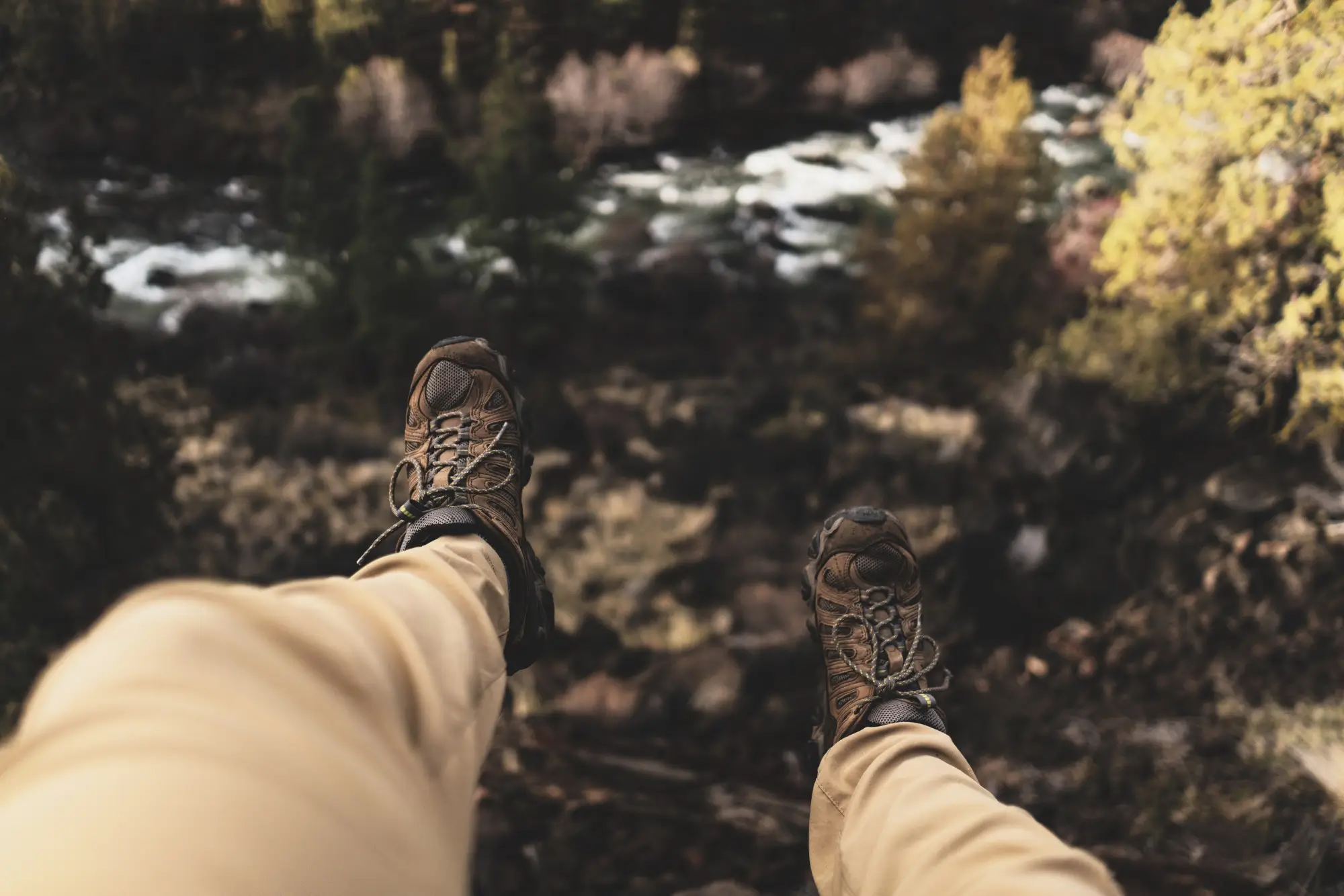
Prepare before you enter rather than adjusting mid-stream. Unbuckle your hip belt and loosen the sternum strap, because a fastened pack becomes an anchor that holds you face-down in eighteen inches of water. Keep your boots on for grip and swap to dry socks on the far bank. Agree on a signal, an order of travel, and a downstream spotter before anyone steps in.
Face upstream and move sideways, shuffling rather than stepping, so you keep two points of contact and never cross your feet. Plant a pole upstream as a third leg. Crossing as a group, link arms parallel to the flow with the strongest upstream, and move at the pace of the least confident person rather than the most.
The decision to cross is made on the bank, not in the current. Once you are committed, your options collapse to whatever judgement you brought with you.
The most valuable river skill is restraint. If the water is above your knees and moving fast, if you cannot see the bottom, or if there is any hazard downstream, wait or walk. Snowmelt rivers drop overnight and are lowest between dawn and mid-morning, so a twelve-hour delay often turns an unacceptable crossing into a routine one. Turning back costs a day.